How did the building blocks help during a difficult time?
This story shows that help can take many forms—
even the kind that fits inside a box of colorful
foam building blocks.
There are situations where even the simplest gestures can bring immense joy. For children living in the shadow of war, every moment of carefree play is like a ray of light. That’s why we decided to give what we do best—building blocks. They aren’t a basic necessity, but they can be the first thing to bring a smile. And in times like these, that often means more than it seems.
“Safety and creativity are not mutually exclusive. Mammutico is proof of that.” — Małgorzata Stępniak
Mammutico as a bridge of hope
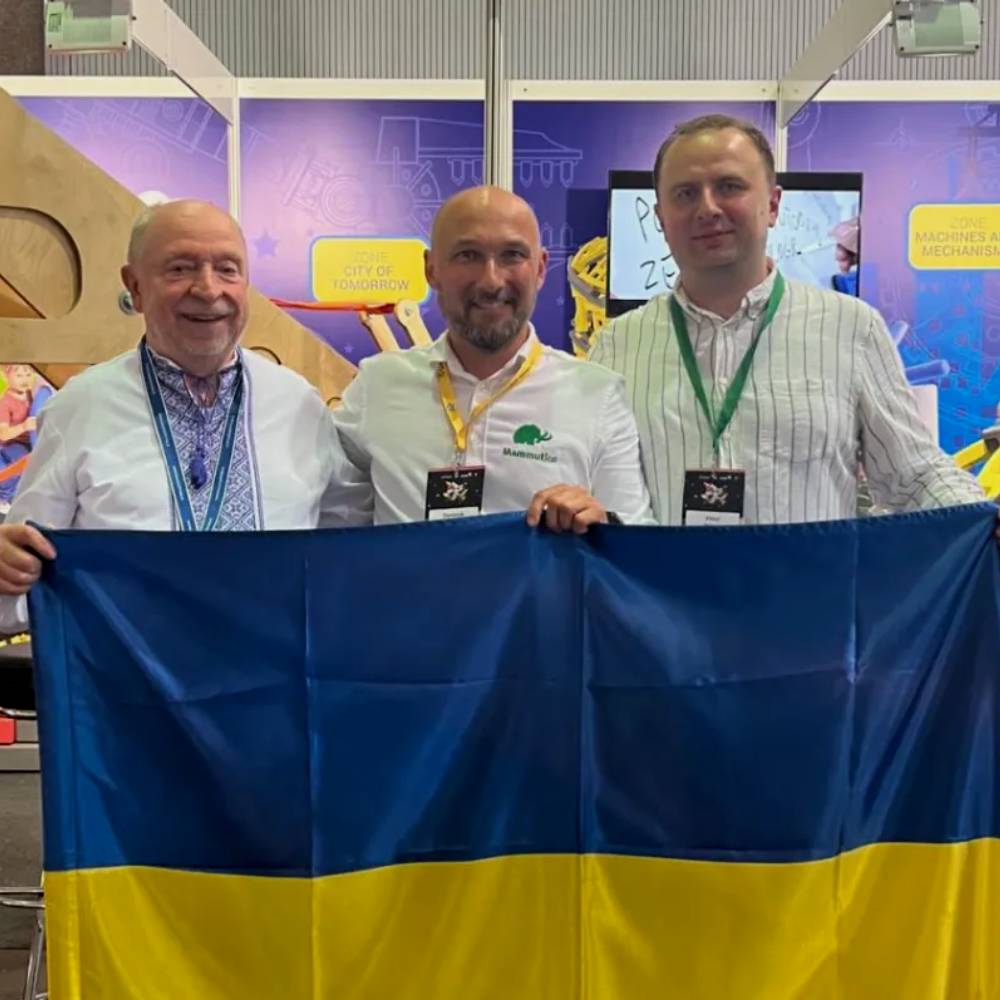
The Mammutico foam block sets that arrived in Kyiv in December 2023 had a very important mission: to help children feel like children again. To build. To destroy. To rebuild. Laughing and creating. We provided support as part of a program run by the National Center "Little Academy of Sciences of Ukraine," and the Open Dialogue Foundation — a Polish organization known for its commitment to defending human rights and assisting refugees and victims of political repression. It was thanks to their experience and network of contacts that the entire humanitarian effort could be organized efficiently, quickly, and safely.
Our building blocks are not just toys. They are a tool that inspires action, develops imagination, and provides a space for emotional expression. In the harsh conditions of war, where children often stay in shelters, where there is no room for a playground, and where every day brings uncertainty—a lightweight, safe building set can mean a great deal.
The first place the blocks visited was the Science Museum in Kyiv—a space that, since the start of the war, has strived to be an oasis of creativity and learning for children. Next, the blocks were part of an educational exhibition at the River Mall shopping center—for a month, hundreds of children were able to play with them amidst experiments and science demonstrations.
However, the real journey began later. As part of the Traveling Science Museum project, the blocks reached eight cities: Chernihiv, Nizhyn, Mena, Konotop, Lubny, Pryluky, Podilsk, and Pivdenne. From September 2024 to January 2025, they were part of a mobile educational exhibition that reached over 5,000 children. These were often children from displaced families, living near the front lines, attending makeshift schools, or completely deprived of regular access to education.
Some of these events took place in unusual locations—in gyms, temporary aid centers, and even in shelters, where some of the exhibits continued to function despite power outages. The blocks don’t need power—all they need are children’s hands and imagination. And that makes them a unique educational and therapeutic tool.
Support for the Ukrainian community
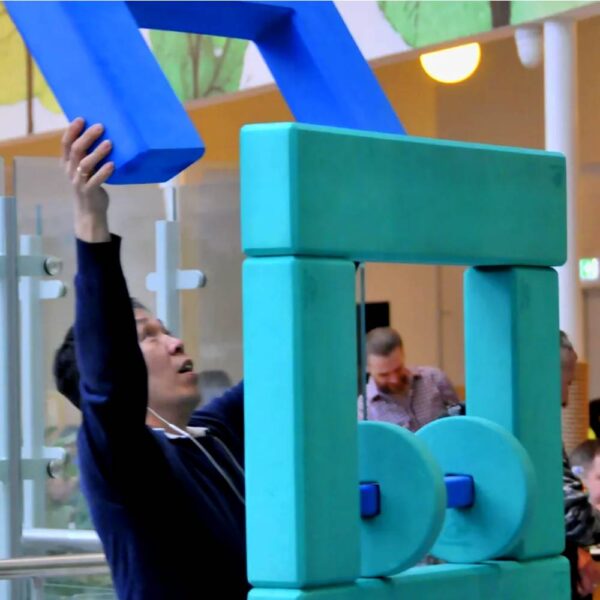
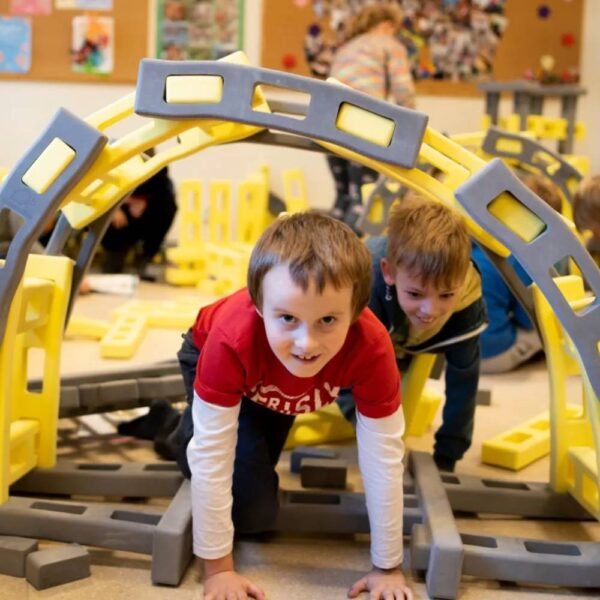
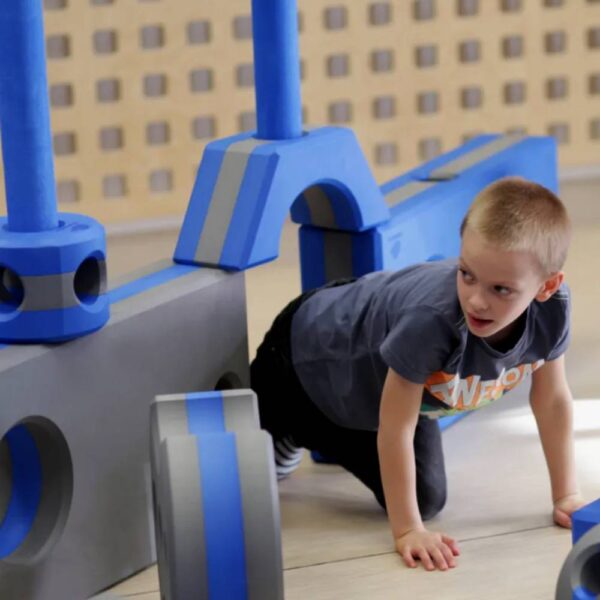
Children built houses, shelters, thrones, bridges, and mazes. They made up stories, assigned roles, planned, and worked together. And sometimes they simply built something only to tear it all down a moment later and start over. This kind of play brings not only joy but also a sense of agency—and that is the foundation of emotional recovery.
“Children don’t need explanations—they run up, touch, and build. Most often, they create houses and shelters where they can hide. Some build bridges and obstacle courses, while others create entire cities,” says Oleksiy Bilyi.
“The greatest value of these blocks is that they give children the opportunity to express themselves. It’s not just play—it’s building their own world,” adds Ivan Boiko.
“Sometimes the children organize themselves into teams—one is the architect, another the builder, and another plans the roof. Sometimes they just tear down the finished structure and start over. Anything is possible,” says Margaryta Kuzminova.
“Funny situations? There were plenty of them. Someone was chewing on the blocks, someone was staging a funeral, someone built a throne for the queen and sat in it for a whole hour,” laughs Anna Dachno.
Our blocks went where they were needed most—not as a symbol, but as a concrete tool to support children’s imagination, movement, and joy. It was a well-planned initiative, carried out in collaboration with experienced partners and aimed at those who struggle with the consequences of war every day.
Mammutico® blocks—a good decision starts with a conversation.