Mammutico at the world’s largest laboratory
Can building blocks explain science? At CERN, they’ve become a bridge between abstraction and experience—showing how play inspires future explorers.
“Children learn through play—it’s not a cliché, it’s science.” — Dr. Anna Kowalska, educator
How did building blocks end up at CERN?
Imagine a place where the world’s brightest minds explore the mysteries of the universe, studying particles so small they remain invisible to the human eye. That place is CERN—the European Organization for Nuclear Research. To make these complex topics accessible to visitors of all ages, the Science Gateway was created—a modern center for education, communication, and the popularization of science. In this futuristic environment, building blocks—Mammutico—play a surprising role. But how can something so simple help explain the most abstract concepts of modern science?
Science Gateway is a space whose mission is to explain the complexities of particle physics in a way that is understandable and engaging—even for children as young as five. Presenting what is invisible and extremely complex in a simple way is a real challenge. Particle physics is a field full of abstractions, advanced equations, and complex theories. Thanks to Science Gateway, however, science becomes accessible to everyone—through interactive workshops, experiments, and modern technologies.
And this is where “Mammutico” blocks come into play.
In Science Gateway educational labs, “Mammutico” blocks serve as a tool for visualizing processes that are normally difficult to imagine. They are particularly useful for demonstrating how particle detectors work—giant devices that record the effects of proton collisions in the Large Hadron Collider (LHC). These detectors consist of many layers, each of which analyzes different aspects of the collisions.
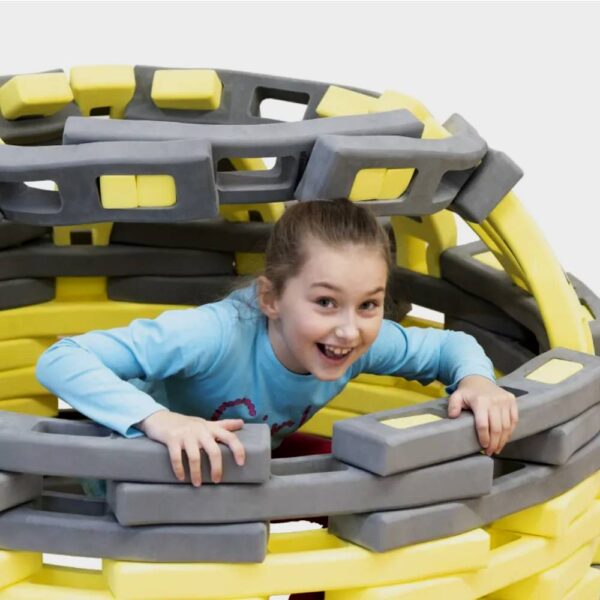
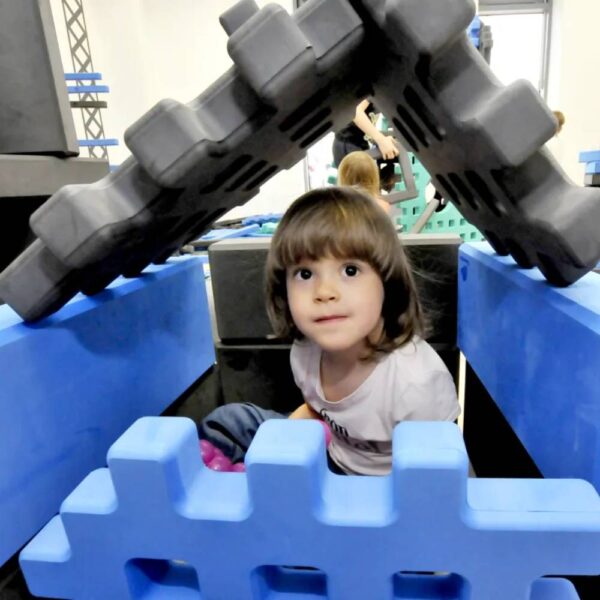
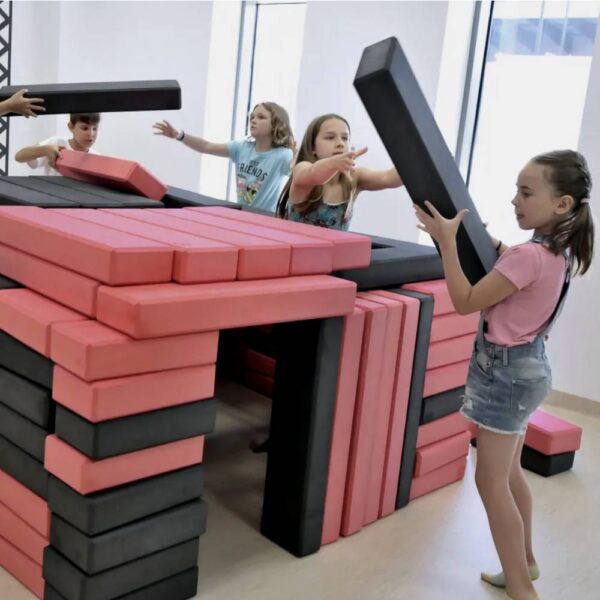
Using “Mammutico” blocks, visitors can build life-size models of these complex machines. The structures are large enough to walk through, making abstract ideas tangible. In this way, both children and adults can better understand what CERN does and discover why the detectors are designed with such precision. Building models not only helps understand the basics of physics but also lets you feel like the engineers and scientists working on the most important questions about the nature of the universe.
What do scientists say about our blocks?
One of the greatest advantages of the Mammutico blocks is their ability to engage participants through play. In the Science Gateway labs, children and adults can not only listen to lectures but, above all, experiment and discover things for themselves.
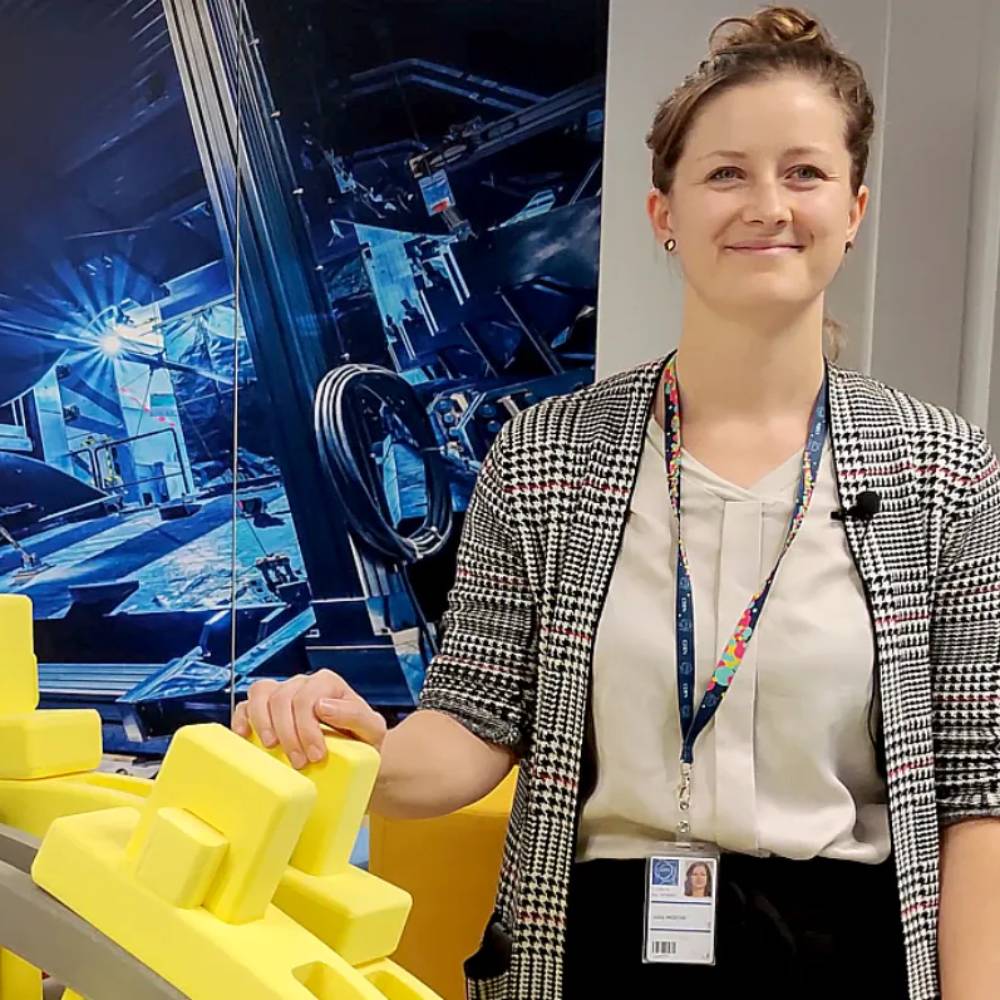
“Our goal is to make the invisible visible,” explains one of the CERN scientists. The Mammutico blocks fit perfectly into this mission. They allow users to build, touch, and even walk through models symbolizing massive particle detectors. Such interactivity not only develops spatial imagination and manual skills but also sparks a natural scientific curiosity.
The collaboration with CERN is proof of the educational potential of Mammutico blocks. At Science Gateway, they serve as a bridge between complex science and accessible, interactive methods of presenting it. Thanks to them, even the youngest children can understand how particle detectors work and why research on proton collisions is so important to science.
Can building blocks change the way we teach science? The CERN example shows that they can. Mammutico are not just a toy, but also an educational tool that simplifies complex concepts and inspires young minds to ask questions.
Thanks to their versatility and simplicity, Mammutico blocks have found a home at one of the world’s most prestigious research centers. At Science Gateway, they not only make particle physics accessible but also inspire future generations to explore the mysteries of the universe.
If you want to see how science and fun can go hand in hand, visit Science Gateway at CERN. See for yourself how Mammutico blocks help open the door to the greatest mysteries of physics and become a tool that builds not only models but also the future of science.
Build the world with your child. We’ll provide the blocks.