When children start building
This article isn’t about building blocks. It’s about what happens between children when they start building
“Children learn through play—it’s not a cliché, it’s science.” — Dr. Anna Kowalska, educator
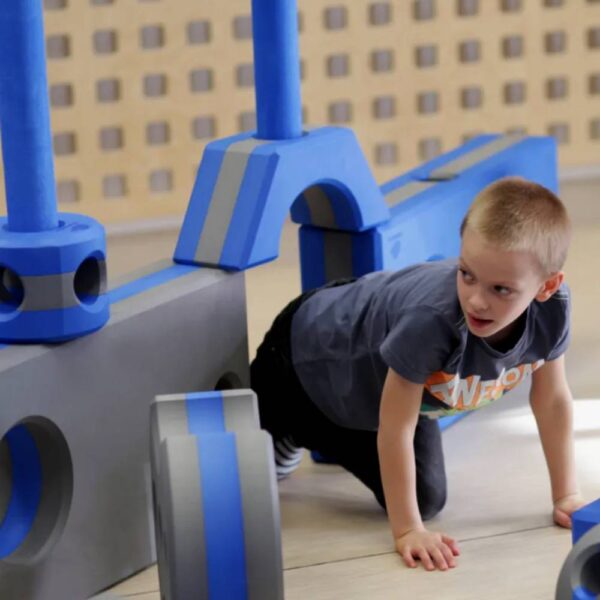
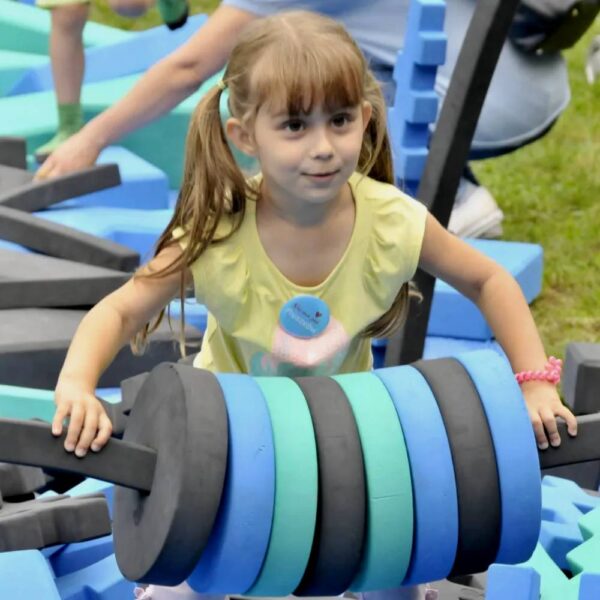
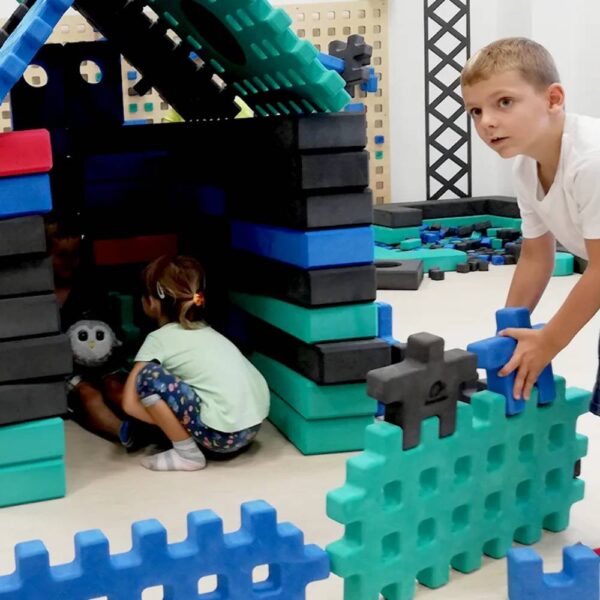
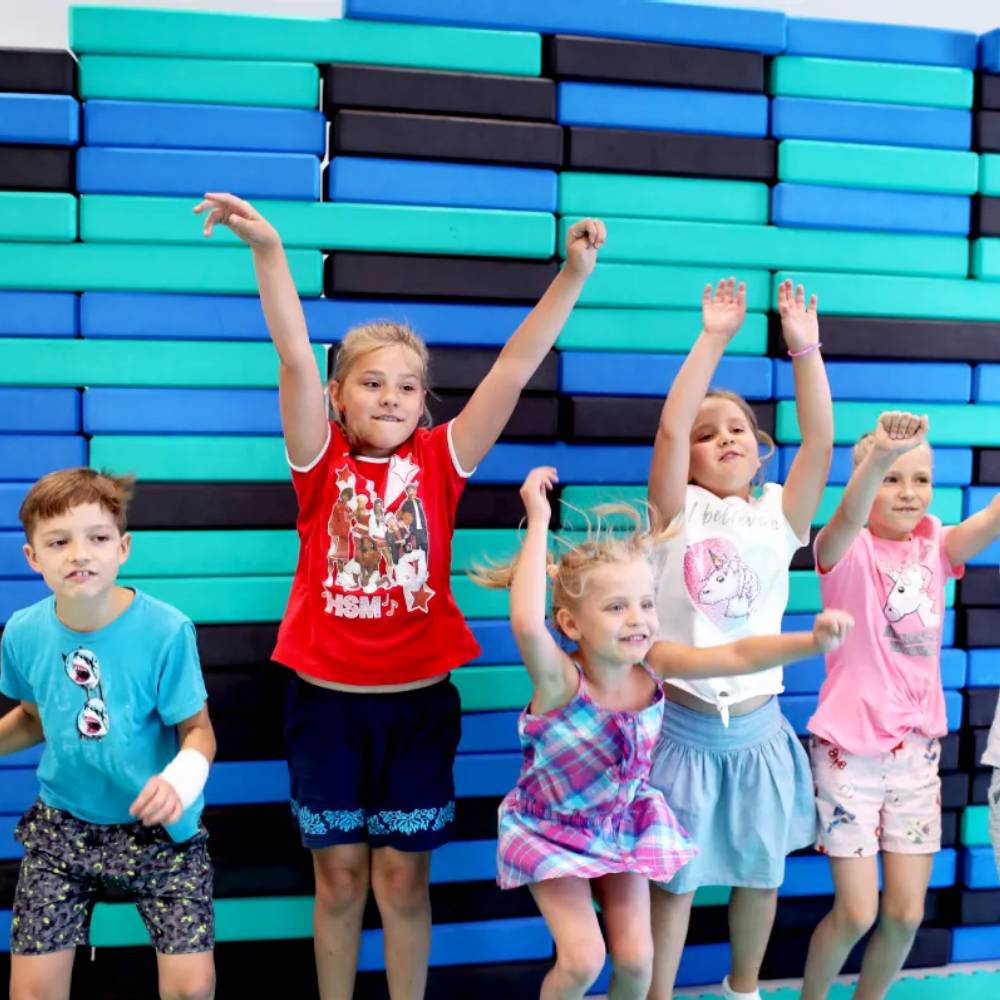
Every wall built by children is not just a random pile of blocks. It’s a strategy, a challenge, and sometimes… a negotiation with peers over “supplies of building materials.” A wall is also a statement: “I can do it!” or “Look how high I can go!” And by the way, it’s a great science lab where children unconsciously practice spatial imagination, planning, and… patience.
Because even though it may seem like a child is simply playing with blocks, they are actually investing in the development of their creativity, logical thinking, and social skills. How? You’ll read about that in a moment.
Stories from Behind the Classroom Walls Mammutico
Discover five scientifically proven reasons that show building walls isn’t just fun, but also a key element of a child’s development. Large blocks for building walls are the perfect tool that combines creativity development, learning through play, and comprehensive benefits for young builders.
Building walls requires planning and anticipating how individual elements will fit together in space. These skills are crucial for developing spatial imagination, which is the foundation of science, technology, engineering, and mathematics (STEM). Research indicates that children who play with building sets perform better on geometric and logical tasks later in life.
Source: Newcombe, N. S. (2010). "Picture This: Increasing Math and Science Learning by Improving Spatial Thinking."
The process of building walls engages both fine motor skills (grasping, stacking blocks) and gross motor skills (manipulating large elements, standing up, reaching). This type of activity enhances hand-eye coordination and physical fitness. Children learn to control their movements and improve their precision, which is crucial for everyday tasks such as writing or getting dressed.
Source: Adolph, K. E., & Hoch, J. E. (2019). "Motor development: Embodied, embedded, enculturated, and enabling.
What Drives Our Community
Building walls in a group promotes cooperation, negotiation, and communication. Children learn to share space, set common goals, and resolve conflicts, which is essential for their future social lives. These types of activities also foster empathy and teamwork skills.
Source: Rogoff, B. (2003). "The Cultural Nature of Human Development."
Building walls requires creativity and out-of-the-box thinking—children must find a way to create a stable and functional structure. In this way, they develop problem-solving skills by learning to experiment, analyze mistakes, and seek alternative solutions.
Source: Sawyer, R. K. (2012). "Explaining Creativity: The Science of Human Innovation."
Building large structures, such as walls, is a process that requires patience, concentration, and perseverance. Children learn to cope with frustration (e.g., when a structure collapses) and develop the ability to achieve long-term goals. Such experiences strengthen their emotional resilience and ability to cope with difficulties.
Source: Mischel, W., Shoda, Y., & Rodriguez, M. L. (1989). "Delay of gratification in children."
These scientific arguments show that building walls is not just fun, but also a key element of a child’s well-rounded development.
Mammutico® blocks — a good decision starts with a conversation.