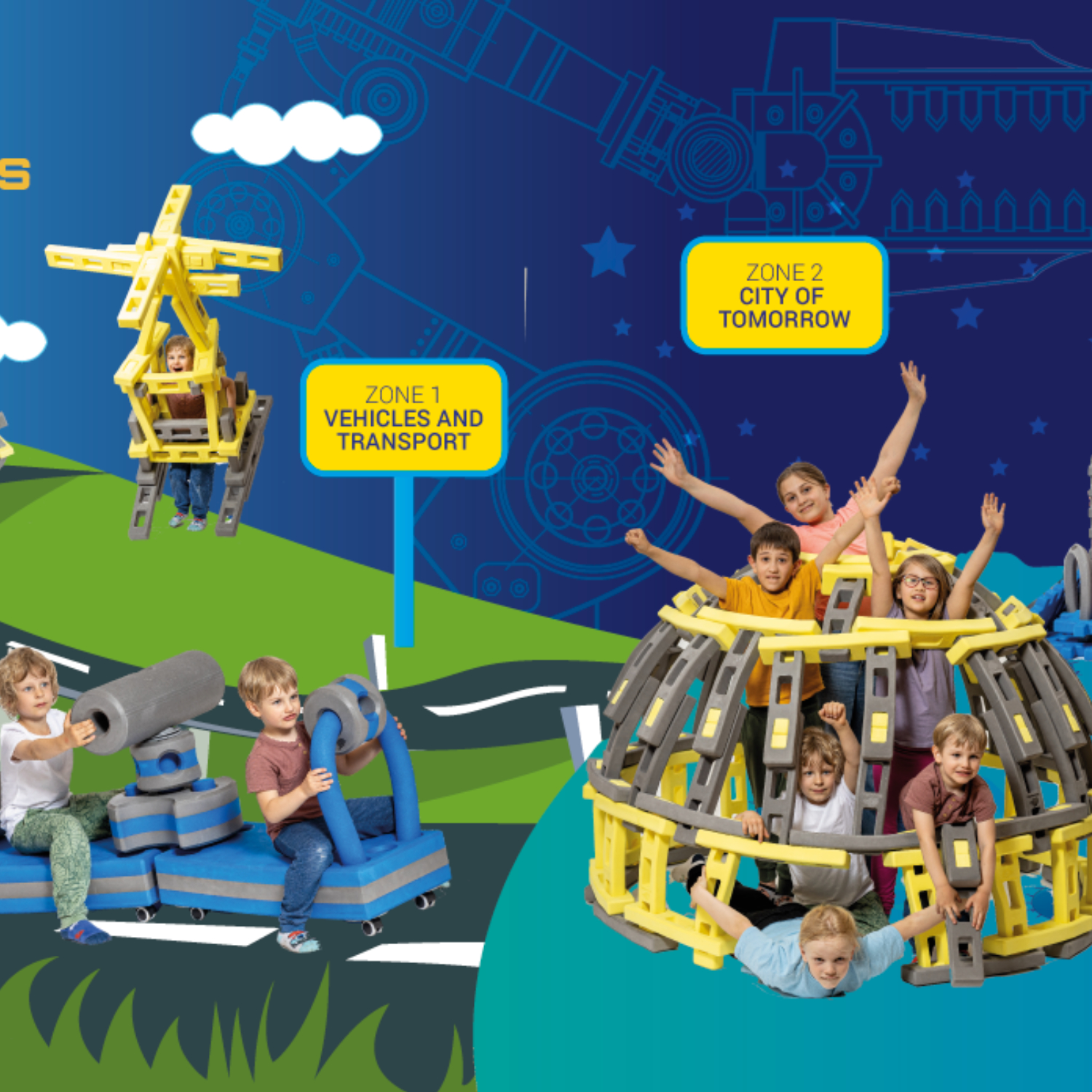
STEAMS is an approach that combines science, creativity, and social skills to create a comprehensive model for child development. How does it work in practice? Just take a look at the playground at Mammutico, where children learn cooperation, engineering, and creative thinking—without boring textbooks or tests.
Modern education is changing rapidly, and schools, preschools, and educational institutions are increasingly turning to modern teaching methods. STEAMS is an approach that combines science, creativity, and social skills to create a comprehensive model of child development. How does this work in practice? Just take a look at the playground at Mammutico, where children learn cooperation, engineering, and creative thinking—without boring textbooks and tests.
STEAMS – a modern approach to education
STEAMS is evolving as a natural extension of STEM and STEAM. It doesn’t mean abandoning traditional teaching methods, but rather supplementing them with key social skills.
What does STEAMS stand for?
S – Science – experimenting, testing, and discovering the laws of physics.
T – Technology – understanding mechanisms and modern tools.
E – Engineering – building, constructing, and problem-solving.
A – Arts – creativity, aesthetics, and designing new forms.
M – Mathematics – logical thinking, proportions, and structures.
S – Soft Skills – collaboration, communication, and adaptability.
How do Mammutico Blocks support STEAMS development?
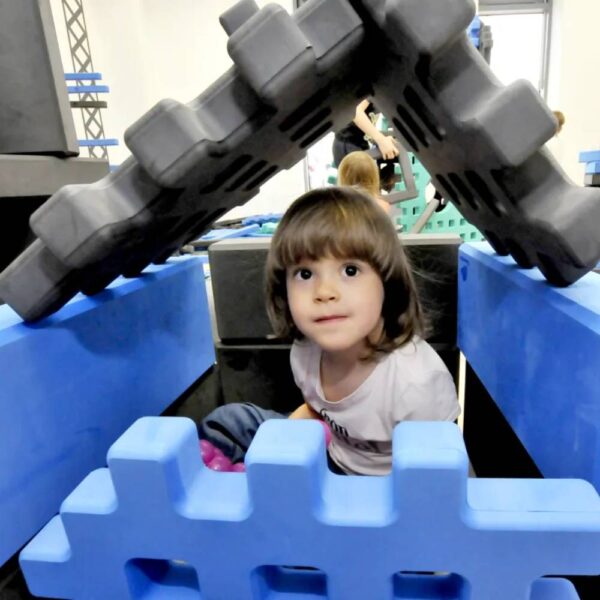
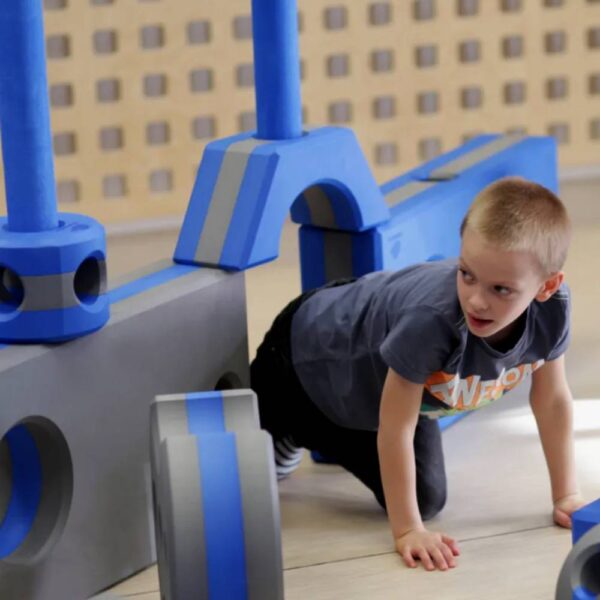
Mammutico is more than just a set of colorful blocks. It’s a living laboratory where children learn through hands-on experience, collaborating and creating projects together. This allows them to develop all aspects of STEAMS simultaneously.
1. Science and engineering in practice
Example: A group of children builds a bridge out of large blocks.
Science: What forces act on the bridge? How can we make it stable?
Engineering: Which structural elements are key to preventing the bridge from collapsing?
Math: How do you calculate how many blocks are needed to maintain balance?
Children learn through experimentation and trial and error, not from ready-made solutions found in a book.
2. Creativity and Art – Designing Spaces
Example: Children are tasked with creating a futuristic city.
Art: What shapes and colors will make the city aesthetically pleasing?
Technology: What innovations could be included—perhaps moving platforms or towers?
Creativity: How can we make the design unique and functional?
STEAMS demonstrates that engineering and mathematics are not separate from creative thinking—they complement each other.
3. Social Skills – The Key to the Future
Example: Children build a castle together, but they must divide up the roles.
Collaboration: Who will handle the base? Who will design the tower?
Communication: How do you explain your vision to others and convince them of your idea?
Adaptation: What should we do if the structure collapses and we have to start over?
On the playground, children learn naturally, through interaction and play. This is a completely different approach to education than traditional school methods.
STEAMS in various settings – practical applications
Preschools – learning through play
Young children learn through experience, not theory. The Mammutico playground fits perfectly into STEAMS education because it offers the opportunity to:
- Discover the laws of physics (e.g., which structures are stable).
- Build creative worlds (e.g., a spaceship, a city of the future).
- Learning to collaborate – preschoolers must work together to create shared structures.
Discover the laws of physics (e.g., which structures are stable).
Build creative worlds (e.g., a spaceship, a city of the future).
Learning to collaborate – preschoolers must work together to create shared structures.
Elementary schools – first engineering projects
Students can create advanced structures that combine knowledge from math, science, and art.
Example:
designing an eco-friendly city – children must plan the layout of buildings, use renewable energy sources, and create a functional space.
Result:
they learn teamwork, innovative thinking, and how to combine different fields of knowledge.
Specialized facilities – therapy through STEAMS
Children with social difficulties, such as autism, can develop soft skills in a natural way. The Mammutico playground helps with:
- Practicing interaction with peers – building together requires communication.
- Developing patience and perseverance – a structure doesn’t always come together on the first try.
- Developing motor skills – manipulating blocks improves motor coordination.
Practicing interaction with peers – building together requires communication.
Developing patience and perseverance – the structure doesn’t always come together on the first try.
Developing motor skills – manipulating blocks improves motor coordination.
Why is STEAMS the future of education?
Because the world requires more than just knowledge—what matters is the ability to collaborate and a creative approach to problems.
Because children learn best when they can be active—andMammutico Blocks are designed for just that.
Because any institution can implement STEAMS—from preschools to schools to therapeutic centers.
STEAMS is more than a teaching method—it’s a way to prepare children for life in a dynamic, ever-changing world. The Mammutico is a tool that makes learning natural, engaging, and comprehensive.
Learning, creativity, and collaboration all in one place
STEAMS does not replace STEM or STEAM—it complements them.
Mammutico is a space where children can develop all elements of STEAMS.
Building, experimenting, and designing together is the best way to learn for the future.
Can education be both effective and exciting? Yes—if it combines learning, creativity, and social skills in one place. STEAMS at the Mammutico playground is proof that fun and development can go hand in hand.