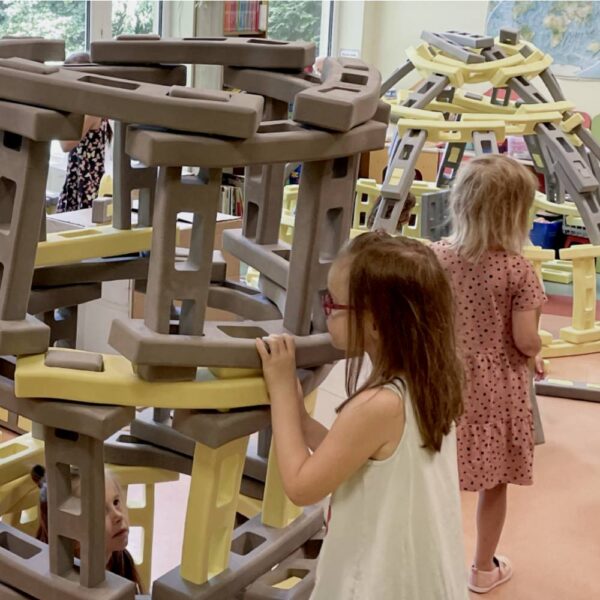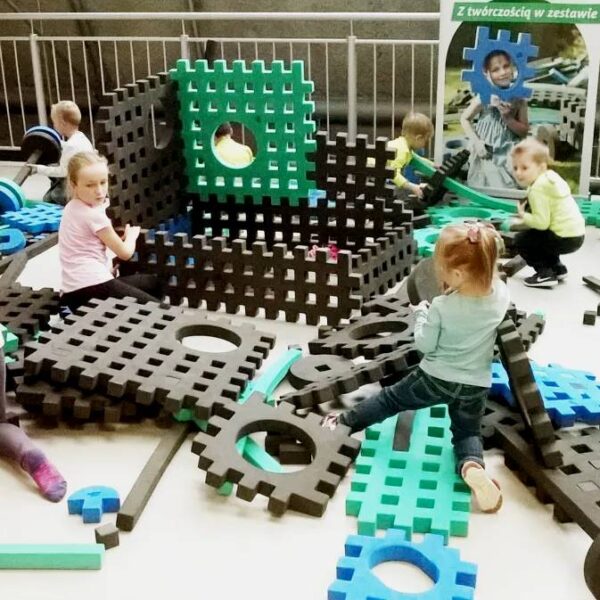
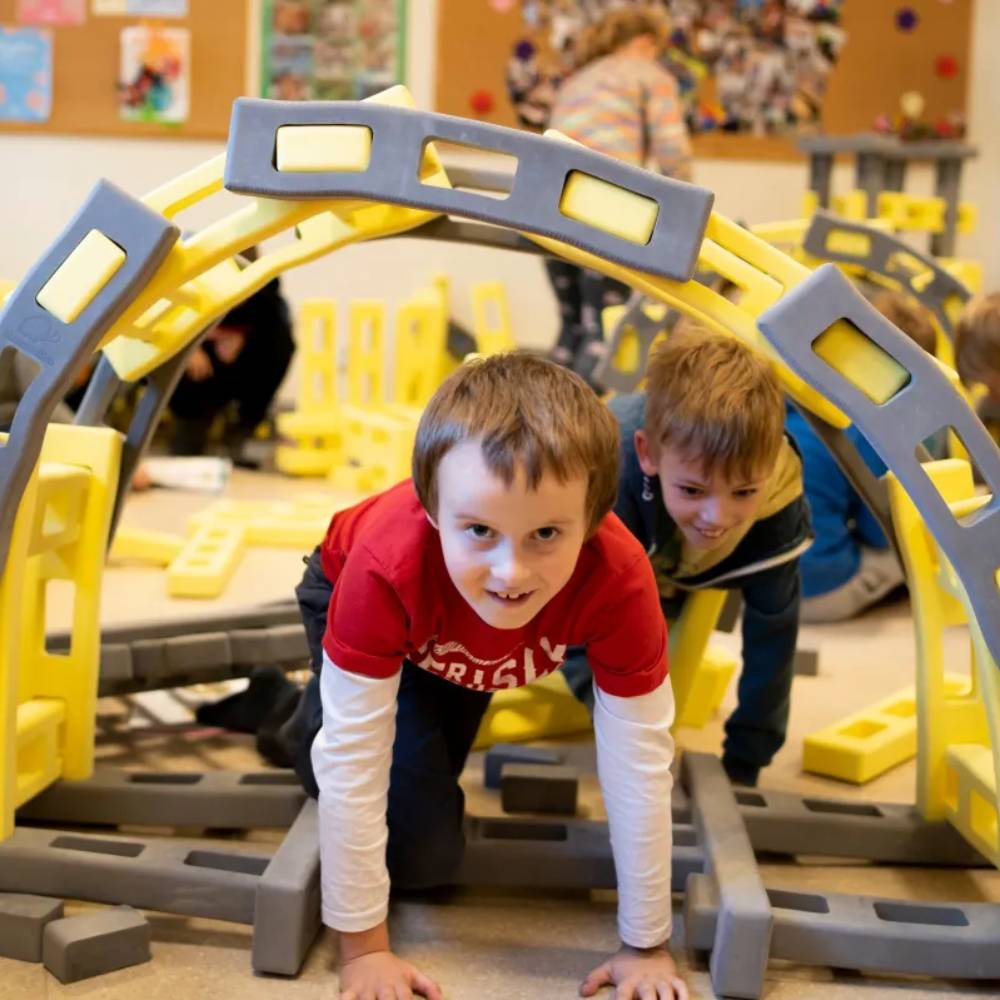
What happens when large PERFECT blocks are introduced into a social therapy daycare center? In short: children who rarely worked together start building together. It’s no miracle. It’s just fun that has a therapeutic effect.
Building blocks in the center—for whom?
The social therapy center in Bytom serves 30 children aged 6–12—mainly from dysfunctional families, with difficulties in peer relationships and low self-esteem. PERFECT blocks were introduced there as a 3-month pilot project.
The choice was not random. PERFECT blocks all have the same shape—which relieves the child of the stress of “I have to choose the right one” and allows them to focus on how to fit one piece with another. Perfect for children who get discouraged easily.
How did they affect the atmosphere?
Teachers noticed three changes in the first few weeks:
- A decrease in conflicts over space. The blocks are large—each child has “their own tower” and sees that someone else has theirs too.
- Natural grouping. Children who previously kept to themselves joined group projects—because “it’s worth helping when someone is building a bridge.”
- Increased concentration. From 5–10 minutes per task, children stayed with the blocks for 30–45 minutes. Without reminders.
“Children learn through play—it’s not a cliché, it’s science.” — Dr. Anna Kowalska, educator
Therapeutic conclusions
After 3 months, the after-school center team decided to keep the blocks permanently. The strongest effect was seen in children with communication difficulties—construction play gave them a nonverbal way to participate in the group.
This is not a tool that replaces therapists. It is a tool that opens the door to therapeutic work—because a child who has just built a bridge with their peers will more easily say “I can’t do it, help me” in a different context.
PERFECT is now being introduced to more after-school centers—in Katowice, Sosnowiec, and Tychy. Each center has a different approach, but the same pattern emerges everywhere: children build, children talk, children stay longer.
Want to learn more? Contact our educational advisors.